
 Greencross Vets
 Should I get my pet desexed?
Desexing (also known as sterilisation, speying, castrating or neutering) your pet is highly recommended by our Greencross Vets team. Not only are there numerous health benefits for your pet, but the number of unplanned puppies and kittens ending up in animal shelters is also drastically reduced. For roaming pets like outdoor cats (whose neighbourhood adventures are hard to track), desexing your pet is especially important.
Recommended age for desexing
The age at which your pet should be desexed varies based on your pet’s breed. As a general rule, cats and smaller breeds of dogs are more frequently desexed at around six months of age whilst larger dog breeds are desexed when they attain their full bone growth. Our veterinary team will take into consideration everything that’s special about your pet before giving any recommendations. Speak with our team to learn more.
What is desexing?
There are many benefits to getting your pet desexed. Surgical desexing involves the removal of part of a pet’s reproductive system whilst under a general anaesthetic. Desexing of females (also known as spaying) involves removing the ovaries and uterus. Sometimes only the ovaries are removed. Desexing of males (also known as castration or neutering) involves the removal of both testicles.
Learn more about the benefits and process of desexing for both cats and dogs in our detailed guides:
If you’d like to learn more about what’s involved, please give our friendly team a call.

The medical benefits of desexing your pet:
Desexing offers significant health advantages for both male and female pets, contributing to a longer, healthier life.
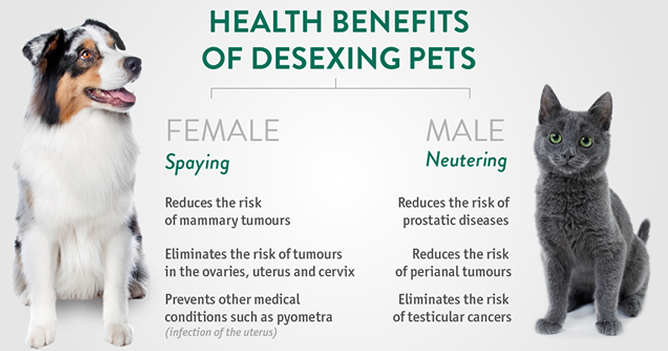
Benefits of Spaying Female Pets:
– Prevention of Uterine Infections: Desexing eliminates the risk of pyometra, a potentially fatal uterine infection.
– Reduced Cancer Risk: It significantly lowers the chance of mammary tumours and removes the possibility of ovarian, uterine, and cervical cancers.
– Elimination of Heat Cycles: Desexing stops the heat cycle, preventing associated behaviours and reducing the attraction of male animals.
Benefits of Neutering Male Pets:
– Decreased Prostate Issues: Desexing reduces the risk of prostate diseases and eliminates the chance of testicular cancer.
– Behavioural Benefits: It can diminish aggressive tendencies, roaming, and territorial marking.
– Improved Hygiene: Desexing often reduces strong odours associated with male urine.

The desexing procedure at Greencross Vets
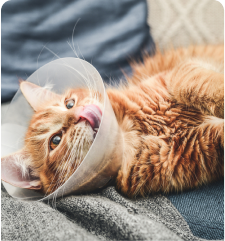
Our team at Greencross Vets are dedicated to providing the highest standards of veterinary care for your pet. Our desexing fee is designed to be all-inclusive for a routine desexing procedure and includes a pre-operative health check, general anaesthetic, intravenous fluids during surgery and the surgery procedure itself. Your pet will also receive a pain relief injection and additional pain control medication to take home. We also provide an Elizabethan collar for your pet to wear so they do not lick their wound and you will take home comprehensive discharge instructions. We follow up with a phone call the next day to ensure your pet has recovered well and make a revisit appointment in 10 -12 days for suture removal.
At Greencross Vets you’ll have peace of mind in knowing that your pet will receive uncompromising care. Our friendly team are here to answer any questions you may have, just give us a call. Find your local Greencross Vets.

What the desexing procedure includes:
Our friendly team are here to answer any questions you may have, just give us a call.

Facts versus Myths
Myth – ‘Females should have a litter before being desexed.’
Fact – For your pet’s health this is not true. Spaying a dog before her first heat will greatly reduce the risk of mammary cancer.
Myth – ‘Desexing will make my pet overweight.’
Fact – Depending on the breed, desexing is generally done at an age when rapid puppy growth is decreasing and diet control is necessary. Reduce the amount of calories that is fed and increase exercise is important after desexing.
Myth – ‘Pets become lazy after they are desexed’.
Fact – There are generally minimal to no changes in the character of pets after desexing. However, young male dogs will be less inclined to mount objects and jump fences in search of a mate.
Click below for more information about:
Or speak with your local Greencross Vets team to learn more or book.