
 Greencross Vets
 There are many skin conditions that may affect our feline companions, ranging from cuts and wounds to itchy, dry skin, lumps and hair loss. Cat skin problems can be quite distressing for a cat and their owners. Read on to learn how to spot common cat skin conditions, what causes them, and how you can help your cat if they experience any of these issues.
Contents:
- Signs of skin problems in cats
- Common cat skin diseases
- When to take a cat to the vet for a skin condition
- How cat skin problems are diagnosed
- How cat skin conditions are treated
- How to prevent skin problems in cats
How to Recognise a Skin Problem in Your Cat
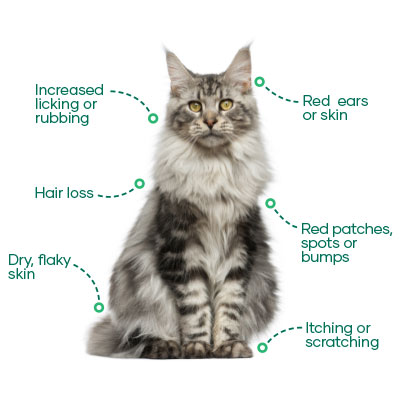
Common signs of cat skin diseases include:
- Itchy skin
- Overgrooming
- Hair loss – can range from bald patches to areas of thinning hair
- Inflamed skin
- Scabs
- Lumps on or under the skin
- Thickened or swollen areas of skin
- Pain
- Wounds
- Discharge (e.g. pus or blood)
- Bad odour
What Are the Most Common Cat Skin Diseases?
Flea Allergy Dermatitis (FAD)
Some cats are overly sensitive to contact from fleas, particularly their saliva. When these cats have even a small number of fleas, their body mounts an excessive inflammatory response, resulting in very itchy, dry, sensitive skin.
Signs of flea allergy dermatitis in cats include:
- Excessive scratching and licking, which can lead to distress or irritation
- Dandruff
- Hair loss
- Skin inflammation
- Skin sores
Itchiness from flea allergy dermatitis can occur anywhere on their body but is most commonly seen over their body and tail base.
Environmental Allergies (Atopic Dermatitis/Atopy)
Atopy is an allergic reaction to environmental allergens, and it’s not limited to pets that go outside. Even indoor cats can suffer from atopy.
There are numerous indoor and outdoor allergy triggers, such as pollens, plants, dust mites, moulds, etc that some cats are overly sensitive to. These allergies may occur all year round or seasonally, depending on the trigger.
When a cat’s skin is exposed to the trigger they’re allergic to, their body produces an excessive immune response which leads to itchy skin and inflammation.
Signs of atopy in cats include:
- Excessive scratch and grooming, leading to distress/irritation
- Dandruff
- Hair loss
- Skin inflammation
- Skin sores
- Sneezing
- Nasal discharge
- Weepy eyes
- Conjunctivitis
Cats with atopy can be itchy anywhere, but most commonly over their body, around the eyes/forehead, ears, paws, and belly area.
Food Allergies
Cats most commonly develop food allergies when they are young (<2-3years old, but some do develop them when they are older. Typically, a cat with a food allergy is allergic to a protein source. Fish, chicken and beef being the most common triggers in cats.
Cats with a food allergy may show gastrointestinal signs, skin signs or a combination of both. Gastrointestinal signs include:
- Reduced appetite
- Vomiting
- Soft stools/diarrhoea
- Constipation
- Anal gland issues
- Weight loss
Skin symptoms associated with food allergies in cats present very similar to atopy. The symptoms appear in the same locations and with a similar skin appearance over the body, paws and belly. However, unlike atopy, food allergies don’t commonly cause eye and nose signs and are a year round issue, rather than seasonal.
Ringworm (A Fungal Infection)
Ringworm is a fungal skin infection that cats can contract. It is a zoonotic disease, meaning it is transferable to humans. Dogs, cats and humans can pass it amongst each other, and it can also live in the environment in places such as carpets, soil and bedding, particularly areas with lots of pet hair accumulating.
In pets, ringworm appears as roughly circular patches of either thin hair or bald skin, often with a dry dandruff skin layer.
In cats it may or may not be itchy. If they scratch the sores, they can become infected and have a pus layer or scab overlying the area. The most common areas of cats affected by ringworm are around the face, ears and legs, though it can be anywhere on the body.
Parasites (Mites and Fleas)
External parasites that commonly affect cats include fleas, ticks and mites.
Fleas can be seen with the naked eye but are very tiny and jump quickly before you catch a glimpse. Cats are also excellent at grooming them out with their barbed tongues, so owners will usually see evidence of fleas rather than fleas themselves, such as “flea dirt” and itchy skin, particularly over the body, neck and tail base.
Mites are microscopic, so they can’t be seen with the naked eye. Signs your cat may have mites include:
- Excess brown ear wax and itchy or sore ears (ear mites)
- Thin/bald patches of hair (demodex mites); or,
- Very itchy, thickened dry skin, particularly over the legs (mange mites)
Ticks typically cause a range of other clinical issues in cats, including paralysis from the deadly paralysis tick, but can leave sores in the skin where they attach/are removed.
Bacterial & Yeast Infections (Pyoderma)
Bacterial and yeast infections often occur secondary to an initial painful or itchy skin condition. The primary issue causes self-trauma (from excessive grooming and scratching), and subsequently, a secondary infection.
Bacterial infections may appear as:
- Inflamed skin that is moist/shiny
- A layer of discharge (pus) that may be cream, yellow or green coloured on the skin surface
- Dried scabbing of this discharge
Fungal infections more often cause the skin to appear thickened or waxy. Sometimes there may be a brown discharge layer. These infections can be moist or dry.
Feline Acne
Feline acne is mostly caused by an excessive build-up of oils in the skin of the chin area. Factors such as food allergies and the environment (such as plastic bowls, which can harbour more bacteria) can exacerbate the condition.
Feline acne can range in appearance from small black dots/scabs on the skin amongst the fur, which do not seem to bother cats, through to multiple painful, pimple looking sores and inflamed, thickened skin, with some scabbing and moist discharge.
Abscesses from Bites or Scratches
Bite wounds can result in an abscess under a cat’s skin. When a tooth or other sharp instrument breaks the skin, bacteria can penetrate into the deeper tissue layers under the skin. The bacteria get sealed off as the wound clots and closes, causing a localised infection. The body tries to stop it spreading by creating a thickened skin barrier around the infection.
Abscesses appear as a very painful lump under the skin or an area of swelling. If left untreated, abscesses will eventually rupture through the skin, resulting in a draining hole or open wound that discharges pus and blood.
Common signs that a cat has an abscess include:
- Pain
- Visible wounds
- Swelling
- Discharge
- Generally unwell (lethargic, off food, vomiting)
Scratches rarely cause abscesses but can be painful and sometimes lead to secondary skin infection.
Eosinophilic Granuloma Complex
Eosinophilic Granuloma Complex (EGC) is a group of severe skin diseases that some cats get. Cats with EGC typically have a significant, abnormal skin overreaction to an allergic trigger, such as food, flea allergies, or environmental allergies
The three main forms of EGC are eosinophilic ulcers, plaques and granulomas.
- Eosinophilic ulcers most commonly present as an ulcer on the upper lips. They range from small ulcers through to large areas of erosion, disfiguring the lip.
- Eosinophilic plaques are most common on the belly and inner thighs. They result in patches of moist, red, raw, thickened skin, that is very itchy.
- Eosinophilic granulomas most commonly develop on the chin, lower lip, in the mouth, and on the back of the legs and paws. They appear mostly as a thin, long patch of swollen, firm, raised, skin that may be inflamed or ulcerated. They are not usually as itchy as eosinophilic plaques.
Lumps and Bumps
There are many types of skin growths and masses in cats , too many to cover here. It is important to have any new lumps found on or under the skin on your cat checked by a vet.
While cats can get benign lumps, like cysts and fatty lumps (lipomas), they are a lot less common than they are in dogs, so having them checked for more concerning masses like abscesses and tumours is very important.
Skin tumours occur less commonly in cats than dogs in general, and when they do, they have a higher chance of being malignant. Some studies report over 50-70% of cat skin tumours are malignant, compared to dogs with around 20-30%.
When Should You Take Your Cat to the Vet?
The precise cause of the skin condition can be quite difficult to diagnose as many look similar or there may be multiple skin issues occurring at the same time.
If your cat has any signs of skin inflammation, sores, wounds, pain, lumps/growths, swellings, significant or persistent itchiness or is unwell, a vet check is always an important starting point to determine the cause and the best treatment plan.
How We Diagnose Cat Skin Problems
To investigate the cause and best treatment option for your cat’s skin issue your vet will likely work through the following approach.
1. Obtain a history
A thorough history is very important to help narrow down the possible causes of the skin issue. Your vet will ask you questions about what you’ve noticed about the skin issue, as well as more general questions about your cat’s health and well being.
2. Physical examination
A thorough check over helps narrow down the type of skin issue and what the next best step is for diagnosis and treatment.
3. Diagnostics/Treatment
If a diagnosis is made in consult with the above then a treatment can be implemented straight away. If the cause of the skin condition is unclear, your vet may start some treatment to make your cat feel more comfortable and clear up any infection while organising and/or implementing some diagnostic tests to help find the underlying cause.
There are several diagnostic tests your veterinarian may use to diagnose your cat’s skin condition. Your vet will recommend the tests that are most relevant to your cat’s symptoms.
- Skin scrapes/ discharge sampling – Samples of the top skin layers or discharge are taken from affected areas and checked for parasites, infectious organisms and some inflammatory diseases.
- UV light – Some species of ringworm glow brightly coloured under UV light so vets will often check suspect lesions.
- FNA (Fine Needle Aspiration) or biopsy – If there is a swollen area, lump or growth of the skin your vet may recommend taking samples from within the lump with a needle. Alternatively, they may take a biopsy of the mass to send off for diagnostic testing.
- Culture – Sometimes vets will collect tissue or discharge samples and submit them for culture at the lab. These cultures identify what types of bacteria are present.
- Food trial – For suspected food allergies your vet may recommend a special diet such as a novel, single protein or allergy diet to diagnose food allergies.
- Treatment/ medication trial – Sometimes vets will use response to certain medications to help make a diagnosis.
If your cat’s skin issue is more complicated, your veterinarian may refer them to a veterinary dermatologist or other specialist for further workup where they can do more in depth and specific skin and/or allergy testing.
Treatment Options for Cat Skin Conditions
The best treatment greatly depends on what the cause of the skin problem is. Below are some example treatments for skin problems in cats that may be recommended by your vet.
Medications (Antibiotics, Antifungals, Steroids)
Infections are commonly treated with antibiotics or antifungals. Inflammatory and auto-immune diseases often require anti-inflammatory medications.
Parasite Prevention & Control
These are used as treatment in cases where parasites are found to be the cause. Having parasites alongside another skin condition can worsen the issue, so having a parasite prevention is often important for management.
Medicated Shampoos & Topical Treatments
For superficial skin issues topical therapies like medicated shampoos or anti-inflammatory creams, may be used.
Diet Changes & Nutritional Support
Special diet trials, a change to a better skin support diet or additives to the diet, such as omega-6 supplements, may be recommended to help support the skin.
Allergy Management
Environmental, diet and medical management are often implemented together to support cats with allergic skin disease.
Can You Prevent Skin Problems in Cats?
To keep your cat’s skin and coat stay as healthy as possible and reduce the risk of skin conditions, follow these steps.
- Stay up to date with your cat’s parasite prevention. Parasites can cause and worsen skin issues. Keeping up to date with parasite prevention is far easier than treating them once they become a problem for your cat and get into the environment.
- Feed your cat good quality food. Not only does good food help maintain a healthy skin and coat, but the gut is also responsible for a lot of their immune system’s capabilities. Eating a nutritious, high-quality diet supports a healthy gut biome, which in turn helps skin, the immune system and reduces the impact of allergies.
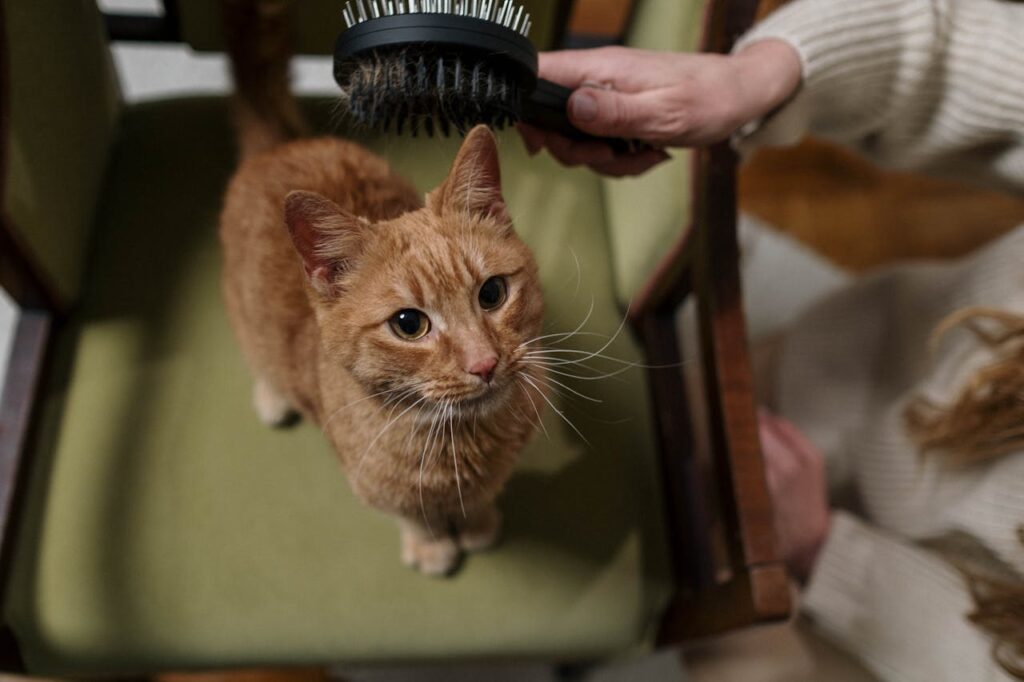
- Groom your cat regularly. This is especially important for cats that have trouble grooming themselves (e.g. senior cats, overweight cats) or have long or dense coats. Regular grooming removes matts and dry, irritated skin; distributes natural skin oils throughout the coat; reduces hairballs; and allows for early detection of any skin issues.
- Keep your cat’s environment clean. Vacuuming the house, cleaning cat hair out of cat towers and bedding, and using air purifiers can help limit allergy triggers in the environment.
- Use the appropriate food bowls. Plastic bowls can harbor bacteria more. Avoid them if your cat is prone to chin acne. Ceramic, melamine, glass or metal bowls are best. Regularly clean your cat’s food and water bowls.
- Reduce your cat’s stress. Stress in cats can lead to a lowered immune system and poorer general health. By providing adequate resources, mental stimulation, heights and hideaways, and attention, you can keep your feline companion as stress-free as possible.
This article was written by Dr. Jade Ridsdale, BSc BVMS
Dr Jade is a Greencross Vets WebVet with over 13 years experience as a veterinarian in multiple small animal practices around Western Australia. She has a passion for feline health care and behaviour and is currently the fur parent to her two sweet, cheeky cats, Flynn and Flo.
Other related pages:
 Food Allergies in Pets: Symptoms and Treatment
 Skin Disease in Pets
 Demodectic Mange (Canine Skin Disease)
 Sore Ears In Pets
 Hair Loss in Dogs – Symptoms, Causes & Treatment
 Allergic Dermatitis In Dogs: Symptoms & Treatment
 A Guide to Allergy Testing for Pets
 Allergies To Pets: Strategies For Managing Symptoms


